
Antigua And Barbuda’s High-End Investment Strategy
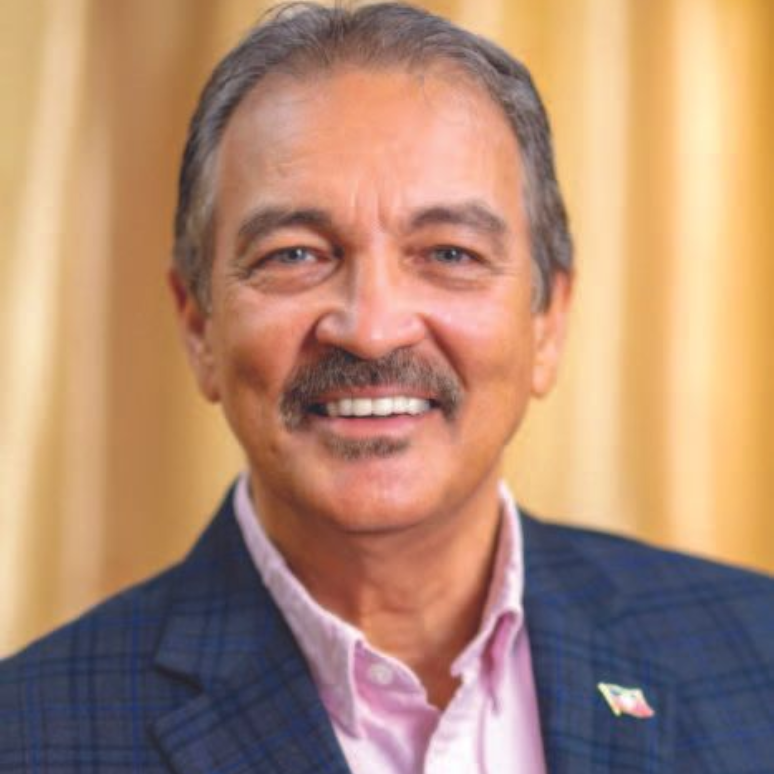
Hon. Charles Fernandez Minister Of Tourism
Beyond traditional resort development, what are the government's priority areas for investment in supporting and sustaining this niche and what incentives are available to investors in these high-value segments?
Following Covid, we found that traveller trends had changed. What became clear was that high-end properties performed significantly better. That is because, whenever there is a downturn or an economic shock, the people least affected tend to be those at the higher end of the market. These are therefore the properties that continue to be more resilient to the kinds of shocks we are seeing. In response, the government has tried, as much as possible, to steer investment towards more high-end or well-established branded products. Tourism is the number one driver of our economy, so it is understandable that most investment is related to, or connected with, the tourism sector.
In terms of incentives, the government offers a package that is linked to the level of investment. So yes, there are incentives in place, and yes, the government is actively pursuing this strategy.
What specific opportunities does the government see for foreign investors in private aviation services, aircraft maintenance, repair and overhaul, or in securing the required Category 1 status to fully capitalise on the airport's potential as a regional hub?
The FBO type of operation goes hand in hand with the high-end traveller, so it is important for us to have that capacity in place. At the moment, we have Signature operating, we have another operator coming in, and we also have CalvinAir as an FBO. These other two are expected to be built out, and we believe that competition will ultimately be beneficial for everyone.
In addition, the opening of the Barbuda International Airport adds another airport to the overall offering for high-end visitors arriving in their private aircraft. Again, those travelling to high-end properties tend, invariably, to arrive on their own private aircraft. This aligns directly with our plan and our broader vision for catering to the high-end traveller.
With major road rehabilitation projects under way, a global shift towards transport electrification, and the LNG plant already in operation, how is the government positioning investment opportunities in the transportation sector to drive greater sustainability and operational efficiency?
There is a major road programme under way. The scale of the network and the level of investment required mean that the Public Works Department, which is responsible for road repairs and maintenance, is not large enough on its own to address all the work that needs to be done. As a result, the government is pushing ahead with a very aggressive programme to bring all roads up to standard, as this aligns with the high-end investment strategy and the broader development vision. In practice, this has meant that the government has partnered, in some cases, with private entities to deliver road projects.
What are the most compelling, specific investment openings for international capital in developing new marine-related services that support the entire lifecycle of a luxury yacht in Antigua and Barbuda?
At present, we have around three marinas in operation, and a major company is preparing to invest in the development of another marina. The objective is to move beyond simply providing berthing for vessels. We want to reach a level where yachts can access high-end repairs, reprovisioning and related services in one location. This will allow us to accommodate high-end cruise vessels and superyachts. We are already seeing an increase in the number of very high-end yachts, and we want to ensure that we are fully equipped to handle them.
You are hosting the Commonwealth Summit, with about 5,000 guests expected, including heads of state and government. How is the government preparing to receive such a large and high-level delegation?
We hosted the Caribbean Hotel and Tourism Organisation meeting in 2025, which brought in around 2,000 delegates, so while this will be larger, it is not unfamiliar territory for us.
We have already begun moving in a very aggressive way into the MICE market. One of the key elements we have to ensure is fully in place is the overall workflow system, which is absolutely central to successful delivery. That is one of the reasons we are pushing so hard on preparations. We need better roads so that people can move around more easily, and we are working closely with hotels to secure room allocations as early as possible, including special rates. We are also factoring in our short-term rental stock.
At present, we have approximately 2,000 rooms available through short-term rentals, alongside around 3,500 rooms in the hotel sector. On that basis, we are quite capable of accommodating up to 5,000 visitors. In addition, new short-term rental properties are coming on stream every week. By the end of next year, we also expect at least one or two new hotels to open. The Marriott should be coming on stream around that time, as well as Nikki Beach.