
GUAM: Creating a Competitive Investment Climate.
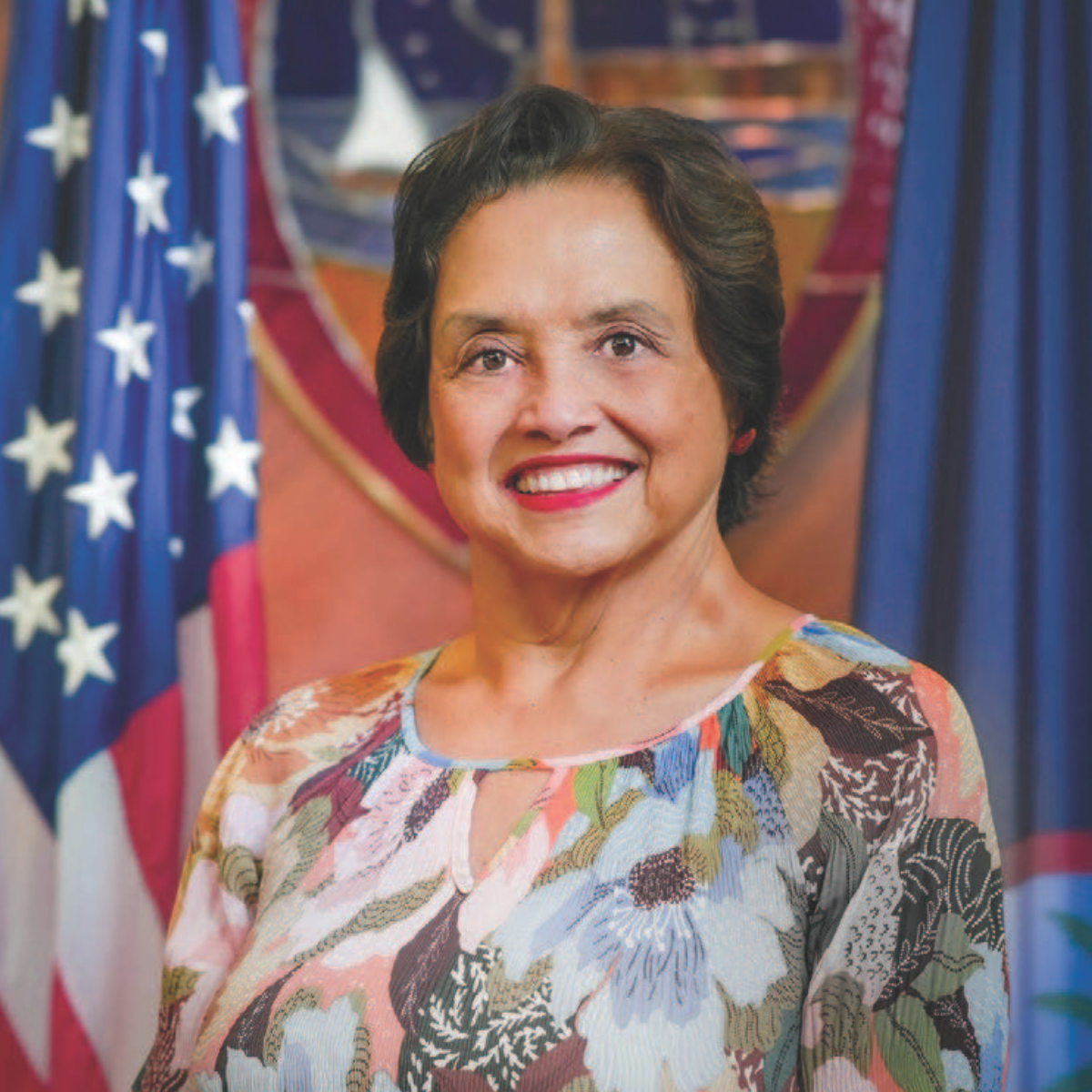
Honorable Lourdes Aflague Leon Guerrero, Governor Of Guam
Guam’s economy has shown recovery and growth, with GEDA reporting improved finances, stronger bond ratings, and rising US trade in 2024. What drove this performance, and what are your priorities for sustaining growth in 2025?
I believe that for investors and businesses to succeed, there must be a strong and financially stable government. Such stability enables us to provide essential services—health care, education, public safety—not only to the community but also to the business sector. Government and business cannot thrive without each other; they must work closely together.
When we assumed office in 2019, one of our first priorities was to stabilize government finances. At that time, we faced a general fund deficit of about $83 million. Within two and a half years, we eliminated it, and for the past four to five fiscal years we have ended each year with a surplus. Today, our cumulative surplus stands at over $110 million.
We achieved this despite the Covid-19 pandemic, which brought tourism—our largest economic driver—to a standstill. We reviewed all finances and found unused federal grants, which we redirected to cover many government operations, easing pressure on our general fund. We also enforced strict fiscal discipline, improved tax collection, and ensured that large corporations were properly licensed and paying the business privilege tax, currently at 5 percent. Military spending during this period also helped sustain our revenue base.
Tourism accounts for roughly 35 percent of our GDP, so its recovery is a priority. We are also attracting new investment—recently, a major foreign investor, Don Don Donki, opened here, and business appears strong.
Looking ahead, we are diversifying the economy. One area of focus is aquaculture, working with the University of Guam, the Guam Economic Development Authority, and partners in Taiwan to develop this sector for export, especially to Asian markets where seafood demand is high.
We are also positioning Guam as a hub for data communications and data centers. Strategically located between Asia and the United States, we already host 11 undersea cables and are working with Google on new connections to Australia and the South Pacific. Improved broadband access, supported by a major US federal grant, will make Guam more attractive to investors who require fast, reliable internet.
Another emerging sector is additive manufacturing, particularly for producing ship parts quickly to support military operations. We are partnering with GEDA, the University of Guam, and the Colorado School of Mines to ensure the quality of parts produced locally.
Through fiscal discipline, targeted investment, and economic diversification, we are working to sustain growth, attract investors, and maintain government stability for the long term.
What incentives or support mechanisms are in place to attract foreign direct investment into the Guam economy?
When investors look at a location, they want to be certain the laws are sound, the government is stable, and the environment is safe. They also want quality healthcare, a strong education system, reliable security, good infrastructure, dependable utilities—water, power, telecommunications—and we have all of that in Guam.
A major incentive we offer is our Qualifying Certificate Program. Investors who apply can receive tax rebates, waivers, or credits for set periods to help offset initial business costs. Our business privilege tax is just 5 percent, which is low compared to many other jurisdictions.
Our culture is welcoming and generous, and we have programs to train and upskill the workforce for business needs. Labor shortages are a challenge, but through Guam Community College and the University of Guam we can develop industry-specific training. For example, if an investor launches an aquaculture business, we can create tailored training to prepare workers for that sector.
Most of our overseas labor currently comes from the Philippines, with others from Korea, Japan, Taiwan, and occasionally Mexico. Demand is high in construction and healthcare. Our universities provide strong nursing, engineering, firefighting, policing, and teaching programs. Guam Community College also trains hospitality staff, childcare providers, and healthcare aides, and works with employers to create apprenticeship schemes. Employers who hire through these programs can also receive tax credits.
Another key advantage is that Guam is a duty-free island with no tariffs on goods sold locally. For exports, if at least 30 percent of a product is US-made, it can be shipped tariff-free. In the context of increasing US tariffs elsewhere, this is a significant benefit for manufacturers based here.
What innovative strategies is your administration implementing to accelerate the recovery of Guam’s tourism sector, attract diverse visitor markets beyond traditional ones, and enhance the overall visitor experience, thereby creating new investment opportunities in hospitality and related services?
We have conducted market research and surveys, using a consulting firm, to better understand changing tourist preferences. The findings show that visitors today seek more than beaches and shopping; they want experiences with depth—authentic culture, local cuisine, and a true sense of what Guam is about.
In response, we have worked closely with village mayors to develop attractions rooted in local identity. Some villages have built events around their signature produce. For example, Hågat, with its abundance of mango trees, hosts an annual Mango Festival, while Mangilao celebrates the Donne’ Festival, centred on hot peppers. Talo'fo'fo, known for its bananas, showcases dishes from banana pudding and cakes to fritters, coconut milk stews, and shakes.
These festivals not only draw tourists but also give them a genuine connection to our traditions and communities.
How is Guam strategically leveraging ongoing federal investments, including military construction and other appropriations, to stimulate private-sector growth and create long-term investment opportunities in infrastructure, housing, and supporting industries?
Geographically, Guam is part of the second island chain of defence, with the first island chain located around Taiwan. In the current geopolitical climate—marked by tensions between China and Taiwan—military planners are assessing how best to defend both the United States and Guam. The first island chain includes islands near Taiwan and several strategic points in the Pacific, while the second island chain comprises Japan’s Bonin Islands and Volcano Islands, Guam, the CNMI, the sovereign island nations of Palau, the Marshall Islands, Pohnpei, Yap, and Western New Guinea. The Philippines is generally considered part of the first island chain.
The United States recognizes Guam’s critical role in national security and is investing heavily to ensure the island is ready to respond to any potential conflict. Guam is regarded as a major strategic asset, a key step in US defence, and essential to maintaining security in the region. This has resulted in billions of dollars being invested in defence infrastructure. A significant example is the Japan–US agreement to relocate Marines from Okinawa to Guam. The Camp Blaz Marine Corps Base, funded by both the US and Japan, is now approximately 60–70 percent complete, and its construction has brought substantial military-related spending to the island.
These projects have generated a ripple effect throughout Guam’s economy, fuelling growth in population, commerce, and civilian construction. A visible sign of progress is the number of cranes and new buildings across the island. While military investment strengthens the economy and enhances sustainability, it is not a permanent solution. The current military build-up may last another five to ten years, but the community must focus on developing long-term, diversified industries.
Guam’s geographic importance also relates to protecting its waters and ensuring that commerce and trade operate in a neutral, fair, and democratic manner. This is a key reason for continued federal and military investment in the island.
Alongside defence-related development, we are working to diversify the economy, with tourism remaining a priority. One initiative we offer is airline incentives: guaranteeing blocks of seats for tourists to encourage carriers to maintain routes to Guam. This has been effective in attracting more visitors. Market research shows strong demand from travellers in Korea, Japan, and Taiwan. However, a shortage of available aircraft is limiting the frequency of flights. Airlines such as Korean Air, Jeju Air, and T'way Air have placed orders for new planes but have not yet received them quickly enough to meet current demand.
Read the full Guam Report
here